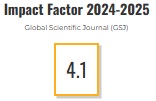
Peer-reviewed international research papers published open-access with EOI assignment and global indexing across engineering, computer science, environmental science, social sciences, and more.
Water and sanitation-related diseases are considered one of the most significant child diseases. Objectives: This study aimed to study effect of health education on Knowledge, Attitude and Practice regarding Hand Washing among Khalaws Students in Alsahafa administrative Unit, Khartoum Locality, and Khartoum State. Materials and methods: This was a descriptive cross sectional study institutional based. The study was conducted among khalwas students aged between 10-12 years in Alsahafa administrative unit, Khartoum locality. All the Khalwa students (334) who were studying at Alsahafa administrative unit khalwas and aged 10-12 years were included in the study. A pre-designed structured questionnaire was distributed to the khalwas to collect the required information on knowledge, attitude and practice of students regarding hand washing. The data was entered and analyzed into SPSS software (SPSS Version 20.0).
Background: Proper hand washing is one of the best ways to prevent the spread of infection. Objectives: This study aimed to study effect of health education on Knowledge, Attitude and Practice regarding Hand Washing among Khalaws Students in Alsahafa administrative Unit, Khartoum Locality, and Khartoum State. Materials and methods: This was a quasi study (pre and post-test design). The study was conducted among khalwas students aged between 10-12 years in Alsahafa administrative unit, Khartoum locality. Convenient sample are used all the Khalwa students (334) who were studying at Alsahafa administrative unit khalwas and aged 10-12 years were included in the study. A pre-designed structured questionnaire was distributed to the khalwas students as pretest to collect the required baseline information on knowledge, attitude and practice of students regarding hand washing, and then the questionnaire itself was distributed after applying an structured teaching programme for six months period for evaluation the effect of the structured teaching programme on change of knowledge, attitude and practice of khalwa students regarding hand washing. The data was entered and analyzed into SPSS software (SPSS Version 20.0).
This study investigated the relationship between corporate governance practices and employee performance, emphasizing how governance structures, accountability systems, and ethical mechanisms shape organizational outcomes. Anchored on agency theory, stakeholder theory, and stewardship theory, the research highlighted the critical role of governance in enhancing trust, fairness, and workplace motivation. A quantitative research design was employed, using structured questionnaires to collect data from 166 employees across selected institutions. Descriptive statistics revealed a youthful and vibrant workforce, underscoring the importance of transparent governance in directing energy toward productivity. Inferential analysis through correlation and regression techniques showed a strong and significant relationship between corporate governance and employee performance. Findings confirmed that accountability, ethical standards, and transparent decision making processes foster employee commitment, reduce organizational inefficiencies, and drive higher performance levels. Beyond reinforcing organizational credibility, effective governance emerged as a catalyst for sustainable productivity and workforce stability. The study contributes to literature by positioning employee performance as a critical outcome of governance systems, particularly within emerging economic perspective. It recommends strengthening accountability frameworks, ethical codes, and inclusive decision making to optimize performance while aligning organizational governance with long term strategic objectives. Keywords: Corporate Governance, Employee Performance, Accountability, Transparency, Organizational Strategy.
The acquisition of practical skills in pediatric care is a major challenge for Medical Technical Institutes (ITM) in Maniema, where child morbidity remains high. This study examines the impact of teaching and learning methods on students’ mastery of practical pediatric skills. Evidence from scientific literature shows that traditional methods—mainly lectures and unstructured demonstrations—limit the development of essential pediatric procedures. In contrast, active teaching approaches such as simulation, Peyton’s four-step method, problem-based learning, and role-playing significantly improve technical performance, clinical decision-making, professional confidence, and long-term skill retention. The study concludes that the progressive integration of these active methods, even in resource-limited settings like Maniema, is crucial for strengthening training quality and improving pediatric care in the region. Keywords : teaching methods, pediatric care, pratical skills, ITM, Maniema
Postpartum hemorrhage (PPH) remains the leading cause of maternal mortality in the Democratic Republic of Congo, particularly in provinces such as Maniema, where home births and a lack of qualified personnel increase the risks. In this context, training health sciences students—future frontline professionals—is a key lever for improving obstetric care. This study aims to strengthen the skills of students at ISTM Kindu in the management of postpartum hemorrhage (PPH), taking into account their specific training needs, in order to improve the quality of care provided to women, while monitoring the evolution of the frequency and lethality of this condition. A descriptive before-and-after study, using both qualitative and quantitative methods, was conducted among 52 students who participated in a training workshop. A questionnaire assessed knowledge and practices before and after the intervention. The study showed a significant improvement in students’ knowledge of PPH management after the training, particularly regarding the definition (52% vs. 84%), postpartum clinical monitoring (50% vs. 84.6%), and the use of the Bakri balloon (30.8% vs. 67.3%). The implementation of adapted pedagogical approaches significantly strengthened students’ competencies, thus representing an effective strategy to improve the management of PPH Keywords: Postpartum Hemorrhage, Approaches, Pedagogical Methods
In this practice-based study, I explore how Deconstructivist thinking can redefine the relationship between garment and body, particu-larly through the concept of the in-between space. Drawing from Jacques Derrida’s ideas of deconstruction and différance, and inte-grating spatial, phenomenological, and material theories, I investigate the garment not as a fixed form but as a dynamic mediator that continually negotiates meaning with the body. Through iterative experimentation—including draping, movement observation, material manipulation, sketch analysis, and prototype development—I identify five spatial conditions that significantly influence garment–body interaction: sound space, memory space, dynamic space, sculptural space, and negative space. These conditions reveal that the in-between space is an active, generative force capable of shaping silhouette, perception, and embodied experience. My findings demon-strate how Deconstructivist methods can expand contemporary fashion practice by shifting attention away from static form and toward relational, fluid, and sensorial expressions of dress. This approach positions the fashion designer as a spatial choreographer who works with tension, void, movement, and trace to create garments that are neither predictable nor passive, but continuously becoming.
This research was carried out to elucidate information on the awareness and use of Internet of Things (IoT) devices for information retrieval among undergraduate students in Obafemi Awolwo University Ile-Ife Nigeria. The study targeted two (2) large faculties within the university namely: Faculty of Science and Faculty of Technology. A structured questionnaire was administered to 400 undergraduate students across two faculties of Obafemi Awolowo University, ensuring a broad range of students from scientific disciplines and demographic backgrounds. Findings of the study reveal that many undergraduates in the selected faculties are not only aware but also familiar with the use of IoT devices for information retrieval and other academic purposes. Based on the findings of this study it is recommended that the University and Library Management of the Obafemi Awolowo University should take decisive steps to facilitate required modern technologies to support IoT enabled facilities in the University Library and on campus in general.
Accessibility to an urban medical emergency facility in the metropolis is provided to enhance the city's medical emergency preparedness and response capabilities to disaster and critical emergencies. The purpose is to save the lives of the urban dwellers within the city and its environs. Urban medical services are essential for ensuring a better quality of life and advancing social welfare. This study seeks to evaluate the efficiency and effectiveness of emergency response operations in Port Harcourt. The effectiveness and fairness of medical facility allocation are determined by assessing the spatial accessibility of these facilities within a coverage area. Urban residents can exchange information regarding medical services and facilities thanks to this type of spatial evaluation. By examining the relationships between the primary, secondary, and tertiary medical facilities located inside metropolitan regions, this study seeks to close this research gap. The research on accessibility and spatial distribution with the interrelationship of these facilities in the city of Port Harcourt employs Geographic Information System (GIS) technology to analyze the location and accessibility of key urban medical emergency facilities such as hospitals. This paper aims to analyze the spatial distribution of urban medical emergency response services and facilities in the study area, as classified into primary healthcare centers (PHC), secondary healthcare facilities, and tertiary health facilities. Nearest Neighbor Analysis (NNA) was employed, and the findings revealed both clustered and dispersed distribution patterns of PHC (Primary Health Centres), SHF (Secondary Health Centres), and THF (Tertiary Health Centres) at the different levels of observations. Using GIS mapping techniques, the study investigates the distribution of these facilities across the city to identify gaps or disparities in coverage. Through the analysis of the three levels of medical facilities and health institutions within the coverage area, the study was able to pinpoint areas that may be underserved or face challenges in accessing timely urban medical emergency assistance. The findings provide valuable insights for urban planners, emergency managers, and policymakers in improving the city's overall resilience to disasters and emergencies. By understanding the spatial dynamics and interdependencies of urban medical emergency response facilities, the Port Harcourt metropolis can better allocate resources, streamline coordination efforts, and save lives during crises. Overall, this research contributes to the growing urban disaster management, urban emergency management, and urban planning studies field by leveraging GIS technology to analyze and optimize the spatial distribution, accessibility, and interrelationship of emergency response facilities in the Port Harcourt metropolis.
The process and practice of effective disaster and risk management are crucial for building resilient and sustainable communities, especially in urban areas where the concentration of population and infrastructure can amplify the impacts of emergencies and disasters. Measuring the spatial accessibility to urban fire services is essential for assessing the spatial balance of public service facilities. These measures are frequently employed as a useful method of evaluating the accessibility of urban fire services. The spatial patterns and accessibility of fire services are key tasks in enhancing fire response efficiency and minimizing property losses and deaths. This paper examines the spatial distribution of fire emergency services and facilities in the study area. This will help visualize the coverage area of each fire station and identify any gaps in coverage within the study area. A Nearest Neighbor Analysis (NNA) method was employed, and the findings revealed both clustered and dispersed patterns of the fire stations in the study area. Using GIS mapping techniques, the study investigates the distribution of these facilities across the city to identify gaps or disparities in coverage. An analysis of the created isochrone maps shows the areas that can be reached within specific time intervals from each fire station. In this regard, this report of the study analyzes potential accessibility to urban fire stations and provides valuable information to assist in strategically planning fire station facilities in urban areas and within local communities. This study helps to pinpoint areas that may be underserved or face challenges in accessing timely urban fire emergency assistance in the event of crisis and fire disaster. The findings of this study provide valuable insights for urban planners, emergency managers, and policymakers in improving the city's overall resilience to disasters and emergencies. Conclusively, by understanding fire emergency response facilities' spatial dynamics and interdependencies, Port Harcourt city planners can better allocate resources, streamline coordination efforts, and save lives during crises and fire disasters. This research contributes to the growing emergency management and urban planning field by leveraging GIS technology to analyze and optimize the spatial distribution and interrelationship of emergency response facilities within Port Harcourt city and environs.
No papers found matching your search. Try a different keyword.
Published papers are indexed in
Submissions Open
See Your Research in the Next Edition
Join thousands of researchers published in GSJ. Submit your manuscript — peer review in 1–3 days, open access publication, EOI assignment, and global indexing across 150+ countries.