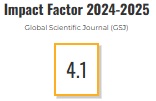
Peer-reviewed international research papers published open-access with EOI assignment and global indexing across engineering, computer science, environmental science, social sciences, and more.
This study aims to role of explore the role of education in preventing violent extremism (PVE) among Bangsamoro youth in Maguindanao del Sur. The research design of the study was qualitative-narrative inquiry to which Thematic Analysis was used to analyze data. Sample of this study included nine (9) Bangsamoro youths who are natives of Maguindanao del Sur, belong to Maguindanaon tribe aged 18-35, regardless of gender and marital status who have knowledge on violent extremism. The study has employed purposive sampling to identify and select participants. The analysis was addressed descriptively to see the themes developed on the perceptions and attitudes of Bangsamoro youth on violent extremism in Maguindanao del Sur (MDS), the role of education in preventing violent extremism among Bangsamoro youth in MDS, and education as a means of promoting civic engagement, and tolerance among Bangsamoro youth in MDS to prevent violent extremism. The findings revealed that education on PVE is critical in promoting peace, tolerance, and critical thinking among Bangsamoro youth anchored on Mahatma Gandhi’s Nonviolence Theory. The study found varied understandings of the Bangsamoro youth in MDS in PVE which highlights the need for education programs that address the underlying factors driving extremism. The study recommended to strengthen the role of education in preventing violent extremism among Bangsamoro youth in MDS, in terms of strengthening access to inclusive and quality education; engaging youth in community-based peace initiatives; enhancing teacher training and community involvement; and develop monitoring and evaluation frameworks.
Keywords: Bangsamoro Youth, Violent Extremism, Education
This study calculates the age of the Earth using the Creational Code System and Complete Synchronization framework (where r0 > 0). The conventional radiometric decay equation was modified to include a core factor called 'delta-R' which representing the differential change in the initial isotopic ratio r0 between non-selected time ranges. To ensure accuracy, 'delta-R' was calculated under very strict criteria, achieving a high degree of accuracy in the calculated r0 values of 99.999% to 99.9999% for non-selected estimated ages' range. Building upon the foundation established in Version 01 of my book on the Creational Code System and Complete Synchronization, this work applies the final equation to 11 radioactive isotopic systems. All systems yielded an identical, consistent result of 'T earth' = 6031 years for the age of the Earth (as an estimate figure).
OGD is now a dynamic accelerator for systemic along with standardized business transformation(Wirtz et al., 2022), having initially started out simply an inactive openness initiative(Hein et al., 2023). This study examines OGD (Hein et al., 2023) ecosystems' dual-engine potential to promote public accountability and business innovation at concurrent time(Fang et al., 2024). We trace the development of raw public sector data(Oesterreich et al., 2022) into business value and public leverage through a mixed-methods structural assessment of existing digital government programs (Haug et al., 2024). The results show that uniform, high-quality OGD(Liang et al., 2025) substantially reduces information imbalances, enhancing the efficiency of supply chains and establishing an environment for (Tseng & Nikiforova, 2024) data-driven business approaches(Chokki et al., 2023). Such ecosystems concurrently enhance open democratic oversight(Ma & Wang, 2025) as well as resist transparent administrative practices that hide structural facts while revealing data thinly(Xu et al., 2025), (Y. Zhao & Fan, 2021a). Despite this, systemic variables including data integration(Satish Dingre, 2023), sophisticated databases and reliable legal frameworks (Bisola Beatrice Oguejiofor et al., 2023) are vitally needed for the achievement of this dual obligation(Acuña et al., 2026). In the final analysis, this periodic presents a unified conceptual framework(D. Liu & Yoon, 2024) highlighting OGD as a connected infrastructure that links democratic integrity as well as economic growth (Putrama & Martinek, 2024).
Abstract:
The study examined the effect of institutional overlap on the performance of micro-sized businesses in the Southern Senatorial District of Taraba State with a focus on the mediating role of organisational capabilities. This study adopts a mixed-method design to offer a holistic understanding of the phenomenon. The quantitative part consisted of a survey of 400 micro-sized business owners, and the qualitative part consisted of in-depth interviews with 38 purposively selected participants. The quantitative data were analysed using partial least squares structural equation modelling and the qualitative data were analysed using a thematic analysis based on Braun and Clarke’s six-phase framework. Findings revealed that the institutional overlap has a significant effect on business performance and organisational capabilities. The organisational capabilities have also a strong positive influence on performance and partially mediate the effect of institutional overlap. Limited institutional support constrained business growth, but firms with strong internal capabilities maintained performance and expanded operations in the study. The study concludes that micro-sized businesses cope with the regulatory and economic challenges with adaptive, innovative and resilient practices, emphasising the importance of organisational capabilities for maintaining performance. The study suggests that policymakers need to simplify regulations and make support mechanisms accessible, while business owners need to invest in capability development for resilience, innovation and operational efficiency.
The blue economy is increasingly promoted as a pathway to economic diversification in coastal West Africa, yet the extent to which fisheries and maritime activities contribute to aggregate growth in the region remains empirically unresolved. This article examines the relationship between selected blue economy indicators and economic growth in 13 coastal West African countries over the period 2010–2024. Using secondary annual data from the World Bank's World Development Indicators, the study applies two-way fixed-effects panel regression to assess the effects of capture fisheries production, aquaculture production and container port traffic on real GDP growth, controlling for gross capital formation, trade openness and population growth, with liner shipping connectivity examined in a supplementary model. The results show that none of the three blue economy indicators has a statistically significant relationship with economic growth at the 5% level, a conclusion supported by wild cluster bootstrap inference and robust to lagged specifications, while trade openness and population growth emerge as consistently positive and significant correlates of growth. The findings imply that the expansion of blue economy activity in the region has not yet translated into discernible aggregate growth dividends, plausibly because production and throughput volumes generate limited domestic value addition. The article recommends policies that strengthen fisheries processing, aquaculture value chains and port–hinterland linkages, and identifies avenues for future research using value-added measures and stronger identification strategies.
This study evaluated the effectiveness and adoption of the Barangay Justice Service System (BJSS) in the Province of Maguindanao, particularly in the municipalities of Upi and Datu Piang. It examined the socio-demographic profile of the respondents, the effectiveness and adoption of the five BJSS components—Katarungang Pambarangay, mediation, counseling, paralegal, and Shariah—the problems encountered during implementation, and the policy implications of the findings. The study employed a descriptive-evaluative research design. Data were gathered from 149 respondents, including program facilitators, disputants, Municipal Barangay Justice Advocates, barangay officials, council of elders, and Bleh Kitab, through questionnaires, personal interviews, and document analysis. Quantitative data were analyzed using descriptive statistics, while qualitative responses were examined thematically. The findings revealed that the BJSS was perceived as very effective in several aspects of community dispute resolution, particularly mediation, counseling, its role as a dispute resolution mechanism, and the dissemination of peace and justice at the barangay level. The program was also highly adopted in preventing conflict, mediating disputes, providing counseling, and facilitating dispute resolution. However, the Shariah component received the lowest assessments in both effectiveness and adoption. The major problems identified included the absence of allowances for Barangay Justice Advocates, the lack of concrete programs for them, insufficient support from local government units, duplication of functions, and difficulties in understanding the paralegal module. The study concluded that BJSS served as an effective supplementary mechanism for resolving community disputes, improving access to justice, and helping reduce the number of cases elevated to formal courts. It complemented rather than replaced traditional dispute settlement practices. The study recommended strengthening local government support, providing continuing programs and incentives for Barangay Justice Advocates, improving coordination among implementing agencies, and enhancing the Shariah component to make it more responsive to local cultural and religious practices. These measures could strengthen the sustainability, effectiveness, and wider adoption of BJSS in culturally diverse communities.
Keywords: Barangay Justice Service System, Katarungang Pambarangay, Province of Maguindanao
Generation Z has become one of the most influential consumer groups, with purchasing decisions shaped by both digital and traditional marketing strategies. This study explored the marketing strategies that influence the purchasing behavior of Generation Z consumers in Quezon City, Philippines. It specifically examined how they experience online and offline marketing, identified the marketing elements they find engaging or disengaging, and explored how they evaluate these strategies when making purchasing decisions. A qualitative phenomenological approach was employed using semi-structured interviews and focus group discussions with 19 purposively selected Generation Z participants aged 20 to 28 years. The data were analyzed through Braun and Clarke's thematic analysis. The findings revealed that participants valued authenticity, credibility, and interactive digital content when engaging with online marketing. They were more likely to trust genuine influencer recommendations, customer reviews, visually appealing content, and personalized promotions, while exaggerated advertisements and intrusive marketing often discouraged them. In physical retail settings, clear product packaging, transparent pricing, attractive store displays, and positive customer service enhanced their shopping experience, whereas misleading promotions, cluttered displays, and negative staff interactions reduced their interest in making a purchase. Overall, the study found that Generation Z consumers carefully assess marketing strategies before making purchase decisions, placing greater importance on authenticity, transparency, and meaningful brand experiences than on persuasive promotional tactics. These findings provide practical insights for marketers seeking to build stronger connections and lasting relationships with Generation Z consumers.
No papers found matching your search. Try a different keyword.
Published papers are indexed in
Submissions Open
See Your Research in the Next Edition
Join thousands of researchers published in GSJ. Submit your manuscript — peer review in 1–3 days, open access publication, EOI assignment, and global indexing across 150+ countries.